

The Block Insights
Pre-Selling vs Ready-for-Occupancy Property: Which Should You Buy?
Pre-selling is cheaper for a reason: the discount is payment for risks the developer is handing you — delivery, expectations, financing, and time. This guide prices each risk, shows how to shrink it, explains what RFO's premium actually buys, and gives clear verdicts for end-users, OFWs, and investors.
Chief Operating Officer, The Block Market
September 5, 2026 · 8 min read · Updated September 7, 2026
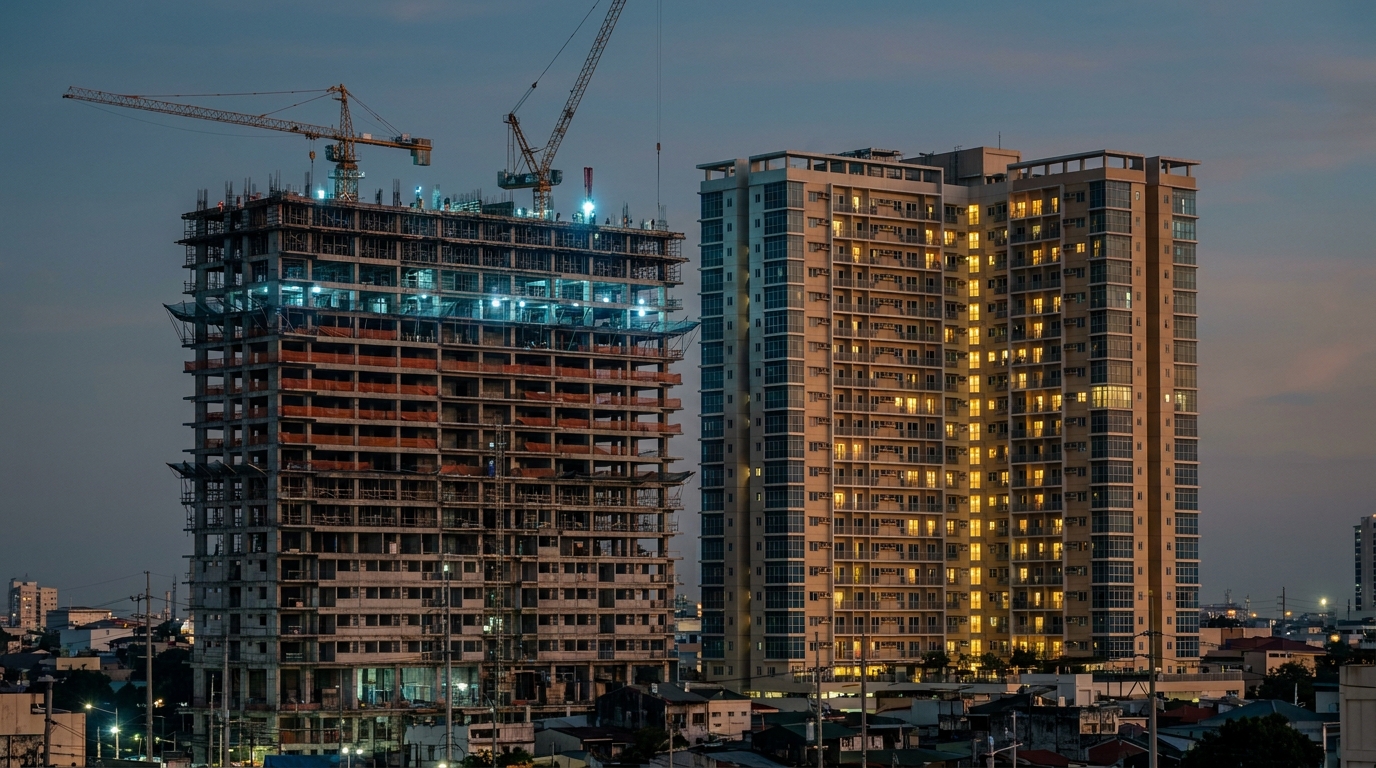
Every pre-selling showroom runs on the same arithmetic: the unit is cheaper today than it will be at turnover, the down payment stretches over years instead of arriving at once, and the flyer's computation makes ownership look almost effortless. All of it can be true. What the showroom rarely explains is why the developer is willing to sell the unit for less — and the answer is the single most useful idea a buyer can bring into this decision.
Pre-selling is cheaper because you are being paid to carry risk. The developer gets your money before the building exists, funds construction partly on it, and in exchange discounts the price and softens the terms. Ready-for-occupancy is dearer because the developer has already carried those risks to the finish line and is charging you for the certainty. Neither is a trick. But once you see the choice as a risk transfer rather than a discount, the right question stops being "how much cheaper?" and becomes "am I being paid enough for the risks I'm taking on — and can I shrink them?"
What Pre-Selling Actually Is
In a pre-selling purchase you reserve a unit that exists on paper — sometimes before groundbreaking, sometimes mid-construction — then pay the down payment in monthly installments over the construction period, with the balance settled at or near turnover, usually through bank, Pag-IBIG, or in-house financing. The operative contract while you pay is a Contract to Sell; ownership transfers only after full payment.
Philippine law does not leave this arrangement to trust alone. A subdivision or condominium project must hold a License to Sell from the DHSUD before units can legally be offered, and long-standing statutes — the subdivision and condominium buyers' protective decree and the Maceda Law for installment buyers — provide remedies around non-delivery, misrepresentation, and cancellation refunds. These protections are real, but they are guardrails, not guarantees: they define your remedies when things go wrong rather than preventing things from going wrong. The buyer's first defense is still choosing well.
The Four Risks You Are Being Paid to Carry
Delivery risk. The project may finish late — or, at the worst end, not at all. Late turnover is common enough in the market that your Contract to Sell's provisions on turnover dates, grace periods, and delay penalties deserve more attention than the amenities page. The mitigation is concentrated in one decision: the developer. A developer's completed projects, and how late they ran against their promised dates, predict your experience far better than any perspective drawing. Verify the License to Sell yourself, then study the track record.
Expectation risk. You are buying a rendering and a dressed model unit; you will receive a construction deliverable. Ceiling heights, actual unit dimensions, finishes, the view that a future tower may erase — the gap between showroom and turnover is where most pre-selling heartbreak lives. The mitigation is documentary: get the specifications, deliverables list, and unit plans into the signed documents, not the sales conversation, and visit the developer's turned-over projects rather than judging by the showroom.
Financial-life risk. The stretched down payment is pre-selling's gentlest feature and its quietest trap: you are committing your household to years of payments against income you are projecting, with the balance — the largest number — due at the end, when financing must actually be approved. If your circumstances change mid-stream, cancellation refunds follow the law and your contract, not your hopes; depending on how much you have paid and what your contract says, walking away can cost a meaningful share of everything paid in. The mitigations: commit at a monthly figure that survives a bad year, understand the refund rules before signing, and treat the end-balance financing as a plan, not an assumption — get pre-qualified early and re-checked as turnover approaches.
Time risk. Even on schedule, you are paying for years before you can live in or rent out the unit — rent and amortization-in-waiting overlap. For an end-user this is a real cost the flyer's comparison against RFO conveniently omits; for an investor it is the price of the entry discount. Put your own housing costs during construction into the computation and the "cheaper" claim gets its honest test.
What RFO's Premium Buys — and Its Own Fine Print
Ready-for-occupancy inverts the deal. You pay more, and sooner: the down payment is compressed instead of stretched, and financing begins at once. In exchange, the four risks above largely vanish. You inspect the actual unit — the true dimensions, the real view, the neighbor noise at 7 p.m. — before committing. You move in, or collect rent, within weeks of closing rather than years.
RFO's fine print is smaller but real. Inventory is thinner — the best-positioned units in a sold-out-early tower went to pre-selling buyers years ago, and some RFO stock is what remained. An RFO unit in a just-completed building still deserves a hard-nosed turnover inspection, because "finished" and "defect-free" are different claims; and an RFO unit in an older completed building is edging toward a resale purchase, where the building's maintenance and the dues history join the checklist. The premium buys certainty about the unit; it does not buy exemption from due diligence.
The Money, Compared Honestly
Pre-selling's advertised advantage is the entry price and terms; its full financial picture includes the payments-before-occupancy years, escalation clauses if any, and the financing that must land at turnover. RFO's advertised disadvantage is the price; its full picture includes immediate use or rental income offsetting the amortization from month one. Run both as cash flows over the same horizon — not as two price tags — and the gap narrows from what the showroom implies, sometimes to nothing, sometimes not. The honest comparison depends on your numbers, which is precisely why it should be your computation sheet, not the agent's, that decides.
One mechanic deserves special attention for financed buyers: in pre-selling, loan approval happens years after reservation. Income, rates, and bank appetite can all move in that time, and an appraisal below the contract price at turnover leaves a gap only cash can fill. Pre-qualification at reservation and a financing recheck mid-construction are cheap insurance against the most expensive surprise this path can produce.
Which Should You Buy?
Buy pre-selling if your cash position needs the stretched down payment to make ownership possible at all; you do not need the unit for years (you are renting affordably, working abroad, or buying ahead of a life plan); you can absorb a late turnover without crisis; and — non-negotiably — you have verified the License to Sell and chosen a developer whose delivered projects you have seen with your own eyes, or through someone you trust.
Buy RFO if you need housing now or rental income now; you value inspecting reality over trusting renderings; your financing is ready and you prefer certainty in the numbers; or this purchase is large enough relative to your finances that delivery risk is simply not a risk you should be carrying.
OFWs deserve their own sentence, because pre-selling marketing targets them hardest: the stretched payments fit remittance budgets, and the years-to-turnover fit a someday-return plan. The fit can be real — but distance amplifies every risk above, which makes the developer's track record, the documented specifications, and a trusted representative at turnover inspection more important for an OFW buyer, not less.
Investors should price the trade explicitly: pre-selling is the entry discount plus escalation upside, paid for in delivery risk and years without income; RFO is income from month one at a fuller price. Neither is the "smart money" choice in all markets — the building, the district, and your holding period decide.
Before You Reserve Either One
The paths converge at the same gate. Whichever you choose: verify the License to Sell for a developer sale, read the Contract to Sell before the reservation fee leaves your hands (the fee is typically non-refundable, which makes it the cheapest point in the entire journey to slow down), get every promise into writing, and put a professional's eyes on anything you do not fully understand. Our reservation due-diligence guide covers that gate in checklist depth, and our step-by-step home-buying guide carries you through everything that follows.
The showroom's job is to make this decision feel urgent. Your job is to make it deliberate. The Block Market is built for the deliberate version — developer track records you can study before believing a brochure, pre-selling and RFO listings you can compare on the same screen, and licensed professionals for the contracts. Take the discount only when you understand what it is paying you for.
Ready to explore properties?
Search PropertiesAbout the Author
More from Nicole Abanilla
- What Is an Assume-Balance Property? Benefits, Risks and Warning SignsSeptember 13, 2026
- What Is a Transfer Certificate of Title or TCT?September 13, 2026
- What Is a Condominium Certificate of Title or CCT?September 13, 2026
Continue Reading

What Is Equity in Real Estate? A Simple Guide for Filipino Homebuyers
In the Philippines, "equity" usually means the part of the price your loan won't cover — everywhere else, it means the share of your home you truly own. Both are correct, and understanding how the first becomes the second is one of the most useful ideas a homebuyer can carry into a showroom.
Ron Limon · September 7, 2026 · 8 min read

What Is a Reservation Fee? What Philippine Property Buyers Need to Know
A reservation fee takes a property off the market and starts your deadlines — and in standard Philippine practice it is non-refundable. This guide explains what the fee does, how it differs from a down payment and earnest money, the narrow paths to a refund, and the five checks to run before you pay.
Nicole Abanilla · September 7, 2026 · 8 min read

What Is Rent-to-Own Property in the Philippines—and How Does It Really Work?
Rent-to-own is a label, not a single product — and everything that matters depends on the contracts underneath it. This guide opens the label up: the lease and the option inside every deal, how option money and rent credits actually flow, what happens if you never buy, and the red flags that separate a bridge from a treadmill.
Nicole Abanilla · September 7, 2026 · 9 min read