

The Block Insights
What Is Rent-to-Own Property in the Philippines—and How Does It Really Work?
Rent-to-own is a label, not a single product — and everything that matters depends on the contracts underneath it. This guide opens the label up: the lease and the option inside every deal, how option money and rent credits actually flow, what happens if you never buy, and the red flags that separate a bridge from a treadmill.
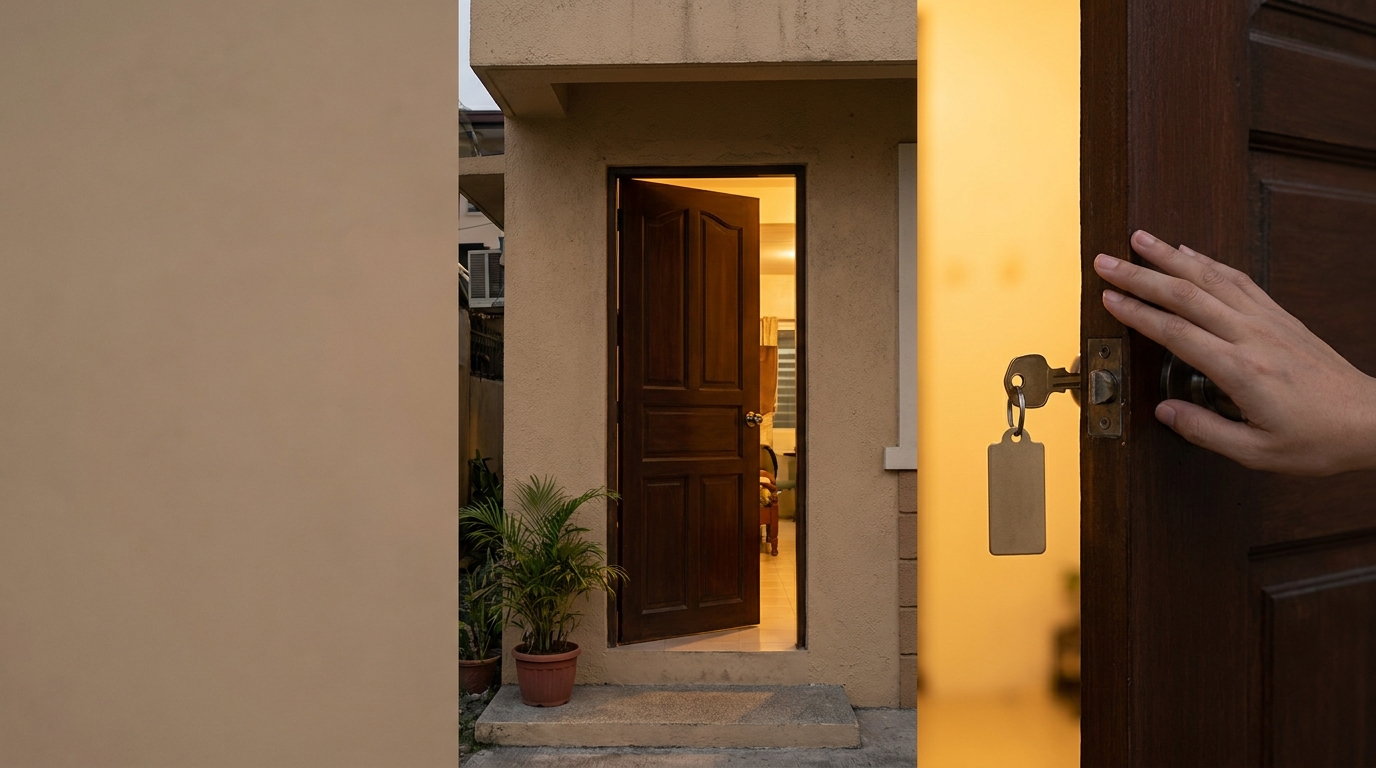
Rent-to-own is the most seductive phrase in Philippine property marketing, and it is aimed at a real ache: the renter who watches money leave every month and build nothing, and who cannot yet clear a bank's down payment and documentation hurdles. Move in now. Your rent becomes your equity. Own it in the end. Sometimes that promise is honest. Sometimes it is a lease wearing a costume.
The difficulty is that "rent-to-own" is not a single legal product in the Philippines. It is a label, and underneath it sit several different contract structures with very different consequences for your money. This guide opens the label up: the contracts inside, the way the money actually flows, what happens in the failure case nobody discusses in the showroom, and how to tell a legitimate offer from an expensive dream.
What Does Rent-to-Own Mean in the Philippines?
In its honest form, rent-to-own (RTO) — formally a lease with option to purchase — is an arrangement where you occupy a property as a renter for a defined period, and hold the right to buy it at a price fixed (or formula-set) in advance, with some or all of what you have paid credited toward that price if you proceed. You are a tenant with a claim on the future.
The Two Contracts Inside Every Rent-to-Own Deal
X-ray any RTO offer and you should find two agreements, whether on one paper or two. The first is a lease: you pay to occupy, like any tenant. The second is an option or purchase undertaking: the owner commits to sell to you at defined terms within a defined window, and defines what portion of your payments counts toward the price. Everything that matters lives in the second contract — the price, the deadline, the rent credits, and the forfeiture rules. A deal that is vague about the second contract while precise about the first is a lease with a marketing slogan attached. Insist on seeing both halves in writing, notarized, before treating the arrangement as a path to ownership.
Rent-to-Own vs Ordinary Renting
An ordinary lease buys occupancy and nothing else. RTO's entire premium — and the monthly payment is usually higher than plain rent on the same unit — pays for the option and the credits. That premium is only worth paying if the option is real, the credits are documented, and you genuinely intend and expect to exercise the purchase. If any of those three is shaky, ordinary renting plus disciplined saving is the cheaper road to the same destination.
Rent-to-Own vs Buying on Installment
RTO also gets confused with installment purchase — the Contract to Sell structure covered in our home-buying and pre-selling guides — where you are a buyer from day one, paying toward ownership under a sale contract. The distinction is not cosmetic. Philippine law extends meaningful protections to installment buyers of residential real estate, and an arrangement's label matters less than its substance: a "lease" whose payments function as installments toward a promised sale may, in substance, be an installment purchase. Where a deal sits on that line affects your rights if things go wrong — which is precisely why the contract's actual text, read by a professional, matters more than what the flyer calls it.
How Does Rent-to-Own Actually Work? The Money, Step by Step
Follow one peso through an honest RTO deal and the structure becomes clear.
Step 1 — Option Money or Initial Payment
Most deals open with an up-front amount — option money, a reservation-style fee, or a small initial payment. In a clean contract this payment is named, receipted, and its fate defined: credited to the price if you buy, and its refundability if you don't stated in plain words. Our reservation-fee guide's discipline applies here unchanged: read before paying, pay against official receipts, and assume nothing about refunds that is not written.
Step 2 — The Rental Period and Rent Credits
Then come the monthly payments, and the single most important number in the deal: how much of each month's payment is credited toward the purchase price. Practice varies enormously — from generous credits in developer programs to token credits in private deals — and the credit exists only to the extent the contract states it, month by month, in a form you can audit. Keep every receipt, and keep your own running ledger of credited amounts against the contract's terms. In a dispute, the buyer with the ledger and the receipts is a different creature from the buyer with a story.
Step 3 — The Purchase Decision Point
The rental period ends at a decision: exercise the option or walk away. Exercising usually means paying the balance — through savings, a bank or Pag-IBIG loan you have spent the rental years qualifying for, or the seller's own continued financing. This is where the arrangement either converts into a standard purchase (Contract to Sell or Deed of Absolute Sale, taxes, transfer, title — the journey our step-by-step guide covers) or dissolves. Treat loan qualification as a project that runs during the rental years, not a hope scheduled for their end: the whole point of the runway is to land on it financeable.
Who Offers Rent-to-Own in the Philippines?
Legitimate RTO comes from three directions, each with a different risk texture. Developers run RTO or rent-to-own-style programs on ready units, typically the most standardized paperwork of the three. Banks and financial institutions sometimes offer lease-purchase terms on acquired assets — properties from past foreclosures — where the institution's ownership is clean but the property sells as-is. And private owners offer everything from well-papered lease-with-option contracts to handshake arrangements a lawyer would wince at. The provider does not change the analysis — find the two contracts, follow the money — but it changes how much verifying you must do yourself. With a private deal, confirm with the Registry of Deeds that the "owner" owns the property and that the title is clean before the first payment, exactly as you would in any resale purchase; you cannot buy a unit from someone who cannot sell it, no matter how faithfully you paid.
What Happens If You Never Buy? The Failure Case, Honestly
Here is the section the showroom skips. If the rental period ends and you cannot or do not purchase — financing falls through, life changes, the price no longer makes sense — the standard outcome in most contracts is that you keep the years of housing, and the owner keeps the money: option money and accumulated rent credits are typically forfeited, in whole or large part, per the contract's terms. You were a tenant with an option; the option expired.
That is not a reason to refuse every RTO deal. It is the risk you are pricing. The premium over plain rent, times the months, plus the option money, is the size of your bet that you will complete the purchase. Make the bet consciously: contracts with longer windows, clearer credits, and any stated refund or extension terms shrink it; vague contracts and optimistic self-assessment inflate it. And if the deal is, in substance, an installment sale dressed as a lease, your position in the failure case may differ — one more reason the contract deserves professional eyes before signature rather than after default.
Rent-to-Own Red Flags: How to Spot a Bad Deal
The pattern of a bad RTO deal is consistent enough to list plainly. Be wary when the seller cannot show a clean title in their own name, or the property carries a mortgage the deal does not address; when the "rent credit" is mentioned verbally but appears nowhere in the contract; when payments are requested in cash, to personal accounts, without official receipts; when the purchase price is left "to be agreed later"; when the contract is one page for a transaction that will run years; and when urgency is manufactured — the unit that must be decided tonight. Any one of these is a pause; several together are an exit.
Who Is Rent-to-Own Really For?
RTO earns its premium for a specific buyer: one whose obstacle is time — time to build a documented income record, time to accumulate the balance of a down payment, time to repair a credit history — and who wants to lock a property and a price while that time passes. It serves OFWs staging a family's transition into a home ahead of full financing, and informally employed earners building toward bank qualification. It serves badly as a way to stretch into a property you cannot realistically finance by the window's end — that version simply converts years of premium payments into the owner's windfall.
If a conventional path is available to you — Pag-IBIG's programs reach further down the income ladder than many buyers assume, and developer installment terms already stretch down payments — price RTO against it honestly before paying the label's premium. Our guide to equity and down payments explains the concepts that comparison turns on.
Questions to Ask Before Signing Any Rent-to-Own Contract
Bring these to the table and watch how they are answered. What is the full purchase price, and is it fixed for the life of the option? Exactly how much of each monthly payment is credited, and where is that stated? What is the option money, and what happens to it in every scenario? How long is my window, and is an extension possible on what terms? Who holds title today, and may I verify it? What happens if I miss a month? What happens if you — the owner — sell, mortgage, or lose the property during my lease? A legitimate counterparty answers all seven in writing without flinching. Anything else is your answer.
Rent-to-own can be a bridge or a treadmill, and the contract — not the brochure — decides which. Read both halves of the deal, follow every peso on paper, and put a professional between you and the signature. The Block Market is built for the readers who do it that way: listings to compare against any RTO premium, developer track records, and licensed brokers and lawyers who read these contracts for a living. Rent if you must, own when you can — and never confuse the label for the ladder.
Ready to explore properties?
Search PropertiesAbout the Author
More from Nicole Abanilla
- What Is an Assume-Balance Property? Benefits, Risks and Warning SignsSeptember 13, 2026
- What Is a Transfer Certificate of Title or TCT?September 13, 2026
- What Is a Condominium Certificate of Title or CCT?September 13, 2026
Continue Reading

What Is a Property Title? TCT, CCT and Tax Declaration Explained
In the Philippines, ownership is what the Registry of Deeds says it is — everything a seller shows you is a claim about that record. This guide explains the TCT, CCT, and tax declaration in plain language, why "tax dec only" land is a different purchase entirely, and the three-step verification every buyer should run.
Nicole Abanilla · September 13, 2026 · 10 min read

What Is a Condominium Certificate of Title or CCT?
A condo unit is a volume of air made ownable by one document: the Condominium Certificate of Title. This guide explains what a CCT covers, how one mother title becomes hundreds of unit titles, why a CCT is not a TCT, when buyers actually receive theirs, and the checks that verify one before money moves.
Nicole Abanilla · September 13, 2026 · 9 min read

What Is a Transfer Certificate of Title or TCT?
A TCT is the registered biography of a parcel — each transfer cancels one certificate and issues the next. This guide explains what a TCT covers (the land, not the house on it), OCT vs TCT, the mother-title moment in subdivision buying, lost owner's duplicates, subdividing family land, and how to verify a title before paying.
Nicole Abanilla · September 13, 2026 · 8 min read