

The Block Insights
How Much Money Do You Need to Buy a House in the Philippines?
The cash a Philippine house purchase requires is not one number but four — reservation fee, down payment, closing costs, and a move-in buffer — each due at a different moment. This guide teaches the computation, works a labeled example, and adds the test that matters more: whether you can carry the house monthly after buying it.
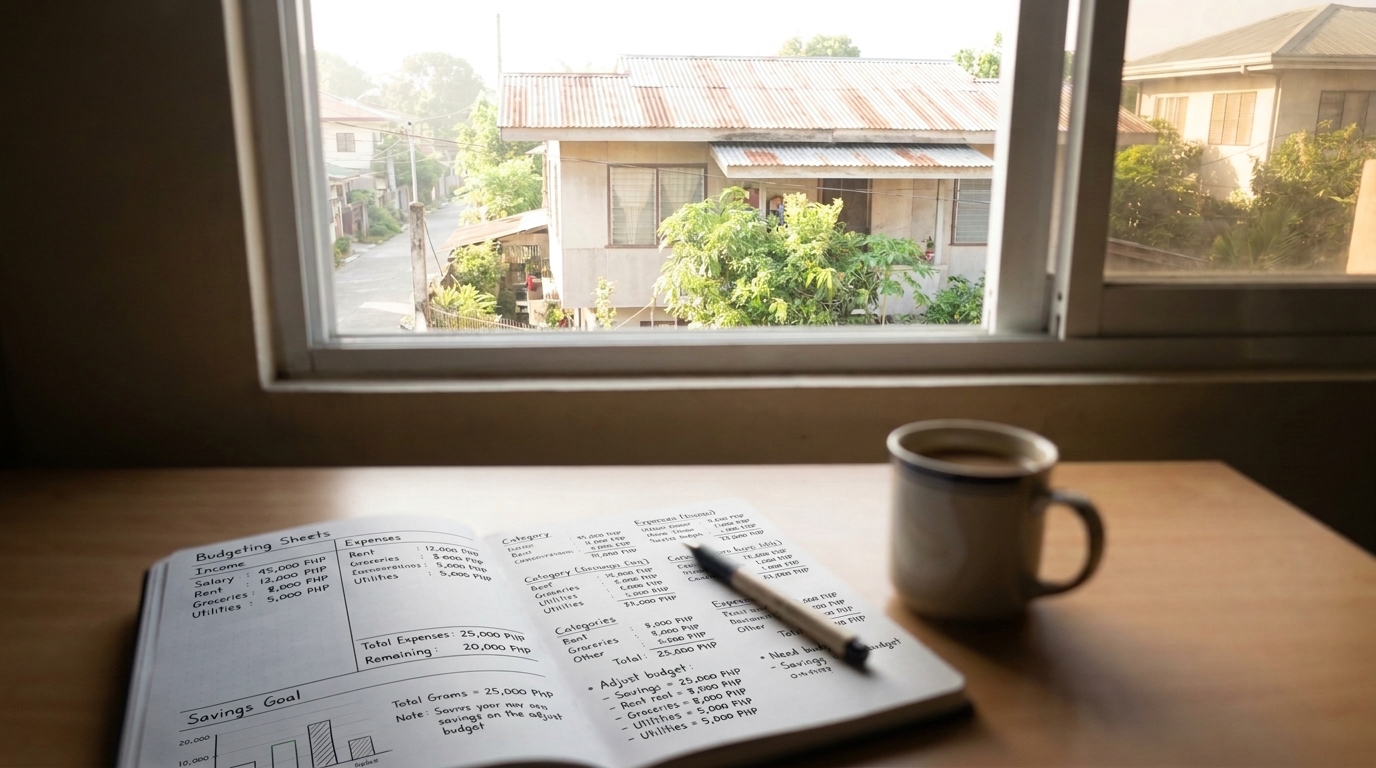
Every future homeowner runs this search eventually, usually at night, usually with a specific number in mind that they are hoping the internet will bless. The internet mostly disappoints them — either with a shrug ("it depends!") or with suspiciously precise figures that were stale before they were published.
Here is the truthful version, and it is more useful than either: the money a Philippine house purchase requires is not one number but four separate amounts, due at four different moments — and once you can name them, you can compute your own answer for any house, at any price, on any payment path. This guide walks you through the four, shows the computation on a worked example, and then asks the harder question the cash-focused guides skip: not just can you buy it, but can you keep it.
The Short Answer: It's a Structure, Not a Number
As a planning frame: a financed home purchase requires cash for a reservation fee (a fixed amount, first), the down payment or equity (the share of the price your loan won't cover, usually the largest cash item), closing costs and fees (a meaningful percentage on top of the price that surprises almost everyone), and move-in costs plus a buffer (the bucket nobody budgets and everybody spends). Everything below is those four buckets, in the order the money leaves you.
The Four Cash Buckets of a Philippine Home Purchase
Bucket 1 — The Reservation Fee (Due First, and Fixed)
The purchase starts with a fixed reservation fee that takes the property off the market — modest for economy housing, larger upmarket, and in standard practice non-refundable. It is normally deducted from the price if you proceed, so treat it as your first payment rather than an extra cost — but only commit it once you have run the rest of this computation, because forfeiting it is the price of reserving before you were ready. Our reservation-fee guide covers what to check in the minutes before this first money moves.
Bucket 2 — The Down Payment or Equity (The Big One)
The largest cash requirement is the share of the price your financing will not cover — the equity, in Philippine market usage. How large depends on the lender's loan-to-value practice and your borrower profile rather than on any universal rule, and it is the single number that varies most across deals: developer promos, bank standards, and Pag-IBIG programs can produce very different equity requirements on the same house. Two things stay true across all of them. In pre-selling, this bucket usually stretches into monthly installments across the construction years, which converts a lump sum into a payment plan (and is the entire secret of "affordable" pre-selling marketing). And at loan takeout, the lender's appraisal — not your contract price — sets the loan, so a conservative buyer holds a margin beyond the computed equity. Our equity explainer covers where this number actually comes from and why it can grow without your consent.
Bucket 3 — Closing Costs, Taxes and Fees (The One That Surprises)
On top of the price, a buyer should expect a package of transaction costs, commonly including documentary stamp tax, local transfer tax, registration fees, notarial fees, and — for financed purchases — loan charges such as appraisal and insurance. Taken together these commonly add several percent of the property's value, with the exact load depending on the deal's structure and who shoulders what (allocations between buyer and seller are negotiable and should be written into the agreement; developer purchases often quote some of these as "miscellaneous fees" folded into the computation sheet — ask exactly what that line includes). The planning rule: whatever price you are targeting, the price is not the total. Budget the package from the start, and demand the itemization in writing before signing anything.
Bucket 4 — Move-In Costs and the Buffer (The Forgotten Bucket)
The purchase does not end at ownership; it ends at living there on stable footing. This bucket holds meter connections and deposits, advance association dues where applicable, the first year's real property tax, essential furnishing or the renovation a resale home needs, and — non-negotiably — an emergency buffer that survives the purchase intact. A household that empties every account to close is one broken water heater from borrowing at terrible rates. Size this bucket honestly; it is the difference between owning a home and being owned by one.
A Worked Example (Illustrative Arithmetic Only)
Take a target price of ₱3,000,000 — chosen for round numbers, not as a market statement — and walk the buckets with stated assumptions. Assume a reservation fee of ₱25,000; an equity requirement of 15% (₱450,000, with the reservation typically deducted from it); closing costs assumed at 7% of the price (₱210,000); and a move-in-plus-buffer bucket of ₱150,000 set by the household's own situation. Total cash across the journey: roughly ₱810,000, or about 27% of the price — against the ₱450,000 most buyers would have guessed from the "15% down" headline alone.
Every figure above is an assumption for demonstration; your lender's LTV, your deal's fee allocation, and your household's buffer will move each one. The point that survives any change of inputs: the cash a purchase needs runs meaningfully beyond the down payment, and the buyer who computes all four buckets before falling in love with a listing is negotiating from a different planet than the one who discovers Bucket 3 at signing.
The Monthly Test: Can You Keep the House You Buy?
The cash question decides whether you can start; the monthly question decides whether you can finish, and it deserves equal billing.
The Numbers That Recur Every Month
A financed home bills you monthly for the amortization; for association or village dues where they apply; for the real property tax (annual, but honest budgeting makes it monthly); for insurance; and for the maintenance that ownership converts from landlord's problem to yours. Lenders will apply their own debt-burden standards to the amortization alone — but their approval ceiling is a lending decision, not a living decision. The household discipline is simpler and stricter: the full monthly cost of the home, dues and taxes included, should fit your income with room left for savings and a bad month. If it only fits on a good month, it does not fit.
Working Backward From Income
The same test runs usefully in reverse for planners: start from the monthly amount your household can carry indefinitely, and let it size the loan — and therefore the price range — you should be shopping, rather than letting a target house dictate a payment you must then survive. Buyers who size the house from the payment almost never lose their homes. The opposite approach keeps lawyers and banks busy.
How the Cash Profile Changes by Purchase Path
The four buckets exist on every path, but their shape shifts. Pre-selling compresses Bucket 1 and stretches Bucket 2 across construction years — the gentlest entry cash flow, paid for with delivery risk and a financing takeout years away, as our pre-selling guide details. Ready-for-occupancy and resale demand Buckets 1–3 across months rather than years — more cash sooner, in exchange for certainty and immediate use; resale adds the diligence costs a private seller's paperwork deserves. Assume-balance deals replace Buckets 1–2 with a negotiated payment to the exiting buyer plus formal transfer costs — sometimes the cheapest cash entry of all, with the structural cautions our pasalo guide exists to deliver. Same buckets, different rhythm: compute before comparing, because a "cheaper" path can simply be a path whose costs arrive later.
Legitimate Ways to Lower the Cash You Need
The honest levers, briefly. Pag-IBIG and socialized/economic housing programs exist precisely to lower entry costs for qualified buyers — check current terms directly with the institutions rather than trusting summaries, this one included. Developer promos periodically discount equity or absorb fees (read what "promo" actually removes versus defers). Stretched equity converts lump sum into time, at the price of pre-selling's risks. And patience remains the most underrated instrument in Philippine real estate: a household eighteen months from ready that buys anyway pays for the impatience in loan terms, forfeited fees, or a Bucket 4 that never existed. What does not lower the cash needed: skipping the closing-cost budget, skipping the buffer, or skipping diligence. Those defer costs; deferred costs compound.
Build Your Own Computation in Five Lines
Take any listing price and write five lines: the reservation fee (ask for the exact figure); the equity at the LTV your lender or developer actually quotes you; closing costs at the itemization you demand in writing; your own Bucket 4, sized by your household, not by hope; and beneath them, the monthly line — amortization plus dues plus taxes — tested against your income's honest capacity. Five lines turn "how much do I need?" from a search query into a savings plan with a finish line. When you are ready to point that plan at real properties, The Block Market holds the listings to set your target honestly, and the licensed brokers and professionals who will walk a real computation sheet with you when the showroom finally has one in front of you. The house is the easy part to want. The five lines are how you get to keep it.
Ready to explore properties?
Search PropertiesAbout the Author
More from Ron Limon
Continue Reading

What Is an Assume-Balance Property? Benefits, Risks and Warning Signs
Assume-balance — pasalo — is how partly paid Philippine properties change hands: real bargains from motivated sellers, and real traps when the developer or lender is never told. This guide covers the three deal structures, the informal-assumption time bomb, the warning signs, and the formal path that protects both sides.
Nicole Abanilla · September 13, 2026 · 9 min read

What Is a Transfer Certificate of Title or TCT?
A TCT is the registered biography of a parcel — each transfer cancels one certificate and issues the next. This guide explains what a TCT covers (the land, not the house on it), OCT vs TCT, the mother-title moment in subdivision buying, lost owner's duplicates, subdividing family land, and how to verify a title before paying.
Nicole Abanilla · September 13, 2026 · 8 min read

What Is a Condominium Certificate of Title or CCT?
A condo unit is a volume of air made ownable by one document: the Condominium Certificate of Title. This guide explains what a CCT covers, how one mother title becomes hundreds of unit titles, why a CCT is not a TCT, when buyers actually receive theirs, and the checks that verify one before money moves.
Nicole Abanilla · September 13, 2026 · 9 min read